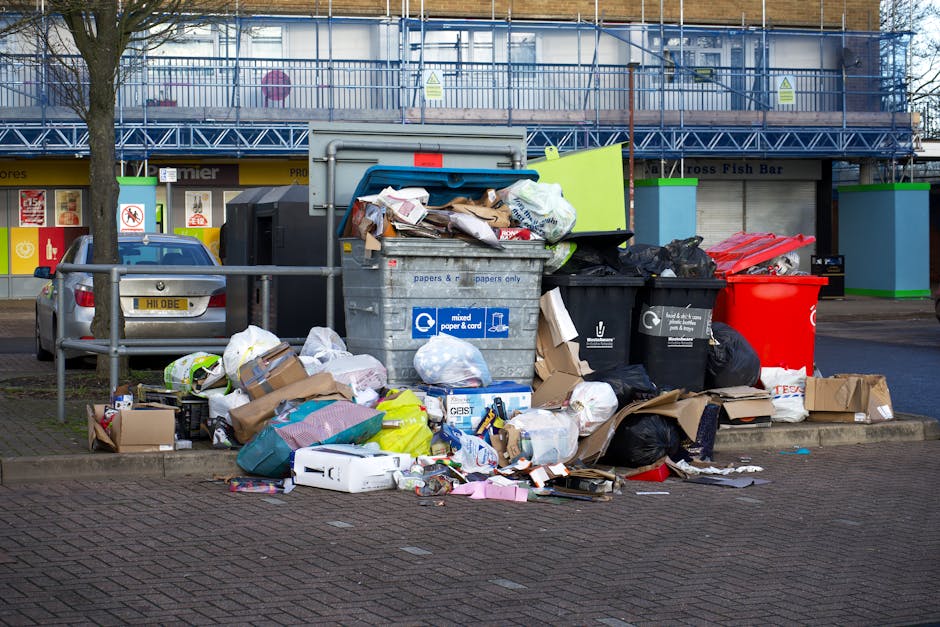
Avoid hidden costs in Wallington rubbish removal quotes

If you have ever opened a rubbish removal quote and thought, "Hang on, where did that extra charge come from?", you are not alone. Hidden costs can turn a seemingly straightforward clear-out into a frustrating little money trap, especially when you are dealing with bulky furniture, mixed waste, builder's rubble, or a last-minute office clear-down in Wallington. The good news is that it is usually possible to spot the warning signs early, ask the right questions, and compare quotes properly before anything is booked.
This guide breaks down how to avoid hidden costs in Wallington rubbish removal quotes without getting bogged down in jargon. You will learn what should be included, which extras tend to appear, how to read the small print, and what a fair, transparent quote should look like in practice. A bit of caution up front can save a surprising amount of hassle later. Truth be told, that's usually where the real saving is.
Why it matters
Rubbish removal pricing can look simple on the surface. A company may quote by load size, by item, by labour time, or by a combination of all three. That is not a problem in itself. The issue starts when the quote only covers the most obvious part of the job and then adds charges for access, heavy lifting, loading delays, restricted parking, disposal category changes, or special handling after arrival.
In Wallington, like much of South London, properties can vary a lot. A ground-floor flat with a clear front drive is a very different job from a top-floor conversion with tight stairs, limited parking, and a pile of mixed waste in the hallway. If the quote was based on a quick photo and the practical realities were not discussed, a revised price on the day can feel unfair even when the provider thinks it is justified. That mismatch is where trust gets damaged.
There is also a practical reason to be careful. A cheap initial quote can sometimes look attractive because it hides uncertainty elsewhere. You might end up paying more than expected, or wasting time arguing over what was "included." The point is not to obsess over every pound. It is to make sure the price reflects the actual job, not a polite-looking estimate that falls apart once the van turns up.
Expert summary: the safest rubbish removal quote is the one that clearly states what is included, what counts as an extra, how the price can change, and what happens if the load is different on the day. If any of those parts are vague, be cautious.
How rubbish removal quotes work
Most rubbish removal quotes are built from a few core ingredients. Understanding those ingredients makes it much easier to compare quotes properly and avoid hidden charges.
1. Waste volume or load size
Many providers price by how much space your waste takes up in the vehicle. A half-load, quarter-load, or full-load style quote is common. This can be fair, but only if the quote explains how the load is measured and what happens if the waste is more compact, bulkier, or heavier than expected. A pile of broken shelves takes up less visual space than a bulky sofa and mattress mix, but the handling may be quite different.
2. Type of waste
General household rubbish, builders waste, garden waste, appliances, and specialist items are rarely treated the same way. Items such as fridges, freezers, mattresses, paint, plasterboard, or anything classed as hazardous can carry additional handling or disposal requirements. A transparent quote should say whether those items are included or priced separately. For example, if you are arranging fridge and appliance removal, ask whether the unit is treated as a standard item or a special disposal item.
3. Labour and access
Some jobs are simple curbside lifts. Others involve stairs, narrow hallways, broken lifts, long carries, or waiting for someone to provide access. If the team has to move items from a loft, basement, or locked office suite, labour time matters. A quote that ignores access can be misleading. This is especially relevant for services such as loft clearance or office clearance, where the job might be perfectly straightforward on paper and much less so in real life.
4. Parking and loading conditions
Parking issues can affect time and cost. If a van cannot stop nearby, the crew may need extra time to move waste to the vehicle. That may be fine, but it should be explained up front. Wallington streets and side roads can be tight, and it is exactly the sort of detail people forget to mention when requesting a quote. Then, ten minutes into the job, the price starts to wobble.
5. Disposal and recycling charges
Some companies build disposal fees into the quote, while others itemise them. Both approaches can work. The important part is clarity. If waste that needs sorting, recycling, or special treatment is involved, the quote should explain whether those costs are already included. If you are comparing providers, the one with the slightly higher but clearer quote may be better value than a bargain price with a laundry list of "possible extras."
6. Minimum charges
Many waste removal jobs have a minimum charge. That is normal. But you should know what the minimum covers, because a short job can still be surprisingly expensive if the minimum is hidden until the last stage of booking. Ask early, before you build your plans around an unrealistic figure.
Key benefits and practical advantages
When you take a few minutes to check the details properly, the benefits go beyond saving money. You also reduce stress, avoid awkward conversations on the driveway, and make the whole clearance feel more manageable.
- Better budgeting: you can plan the job around a realistic cost rather than a best-case guess.
- Fewer surprises: there is less chance of a revised price appearing on collection day.
- Faster decisions: clear quotes are easier to compare than vague estimates.
- Better service fit: the provider understands your waste type, access, and timing needs before arriving.
- More trust: a transparent quote usually signals a more professional operation overall.
- Less waste: accurate descriptions reduce the risk of paying for the wrong kind of service.
There is a quieter benefit too. Once you know what to look for, you become a better customer. Not in a fussy way. Just sharper. You ask cleaner questions, you give better information, and the provider has a much fairer chance of giving you a proper price first time. Everybody wins, which is rare enough these days.
If your job involves mixed household items, a partial house clear-out, or furniture that is awkward to move, it may help to look at related service pages such as home clearance or furniture clearance so you can match the service to the actual task.
Who this is for and when it makes sense
This matters for a lot of people, not just landlords or builders. In fact, hidden charges tend to catch ordinary homeowners off guard because they do not deal with rubbish removal every week.
You may need to be especially careful if you are:
- clearing a flat before moving out
- emptying a garage, loft, or shed after years of build-up
- getting rid of old office furniture and paperwork
- dealing with post-renovation waste
- disposing of bulky household items such as sofas, wardrobes, or mattresses
- arranging a business waste collection with a tight schedule
It also makes sense if your waste includes unusual items. A lot of people assume everything is priced the same until they mention an appliance or a broken cabinet and the conversation changes. That is normal, but it is precisely why the details matter. If you are disposing of a bed frame and mattress, for example, a specialist service like mattress and sofa disposal may be more suitable than a generic bulk waste quote.
Households going through a bigger clear-out often benefit from planning linked tasks together. A full property job may involve furniture, loft items, and general waste, which is why pages such as house clearance and garage clearance can be useful reference points when you are deciding what kind of quote you actually need.
Step-by-step guidance
If you want to avoid hidden costs properly, the best approach is methodical. Nothing flashy. Just a clear process.
- Describe the waste accurately. List the item types, approximate quantity, and whether anything is unusually heavy, awkward, or fragile.
- Explain access conditions. Mention stairs, lifts, distance from the van, narrow entrances, parking limits, or collection from different floors.
- Ask what the quote includes. Labour, loading, transport, disposal, recycling, VAT if applicable, and any call-out minimum should all be clear.
- Ask what counts as extra. Special items, longer labour time, extra volume, parking issues, or last-minute waste additions may affect the price.
- Request the price in writing. Even a short email or message summary is helpful. It reduces misunderstandings later.
- Check the terms carefully. Look for cancellation fees, waiting charges, missed access charges, and any wording about revised quotes on arrival.
- Confirm collection timing. If you need a same-day or narrow delivery slot, make sure that is covered by the quote rather than assumed.
A useful way to think about it is this: if the person giving the quote cannot picture the job, the quote is probably under-informed. A few extra details now are far easier than negotiating when the crew is already standing beside your pile of stuff on a rainy Tuesday morning.
For business or commercial jobs, the same logic applies, but the stakes are often higher because time matters more. If a shop, office, or rented workspace needs clearing, reviewing business waste removal alongside pricing and quotes can help you understand how commercial jobs are usually scoped.
Expert tips for better results
These are the kinds of details that tend to make the biggest difference in the real world.
Be specific about mixed loads
Mixed waste often costs more than one clean waste stream because it needs sorting. If your pile includes cardboard, timber, soft furnishings, metal bits, and a few odd household items, say so. The quote will be more accurate, and the provider is less likely to re-price it on the day.
Take a couple of photos from different angles
Photos help a lot, but only if they show scale properly. Stand back. Include a doorway or a familiar object for size. A single close-up shot can make a tiny pile look enormous or, more commonly, make a huge pile look deceptively tidy. We have all seen that one. It happens.
Ask about recycling and disposal treatment
A transparent provider should be able to explain, in plain language, how waste is sorted and what happens to recoverable materials. If sustainability matters to you, check whether the company can talk sensibly about recycling rather than just using green words on autopilot. Related information on responsible disposal is often reflected in recycling and sustainability.
Separate hazardous or specialist items early
Do not sneak in awkward items and hope for the best. Paint tins, chemicals, certain electricals, and similar materials can require specialist handling. If you think something may be classified as hazardous waste, ask before booking. It is far better to raise the question than to have the job delayed while everyone stands around wondering what to do with it.
Use one contact person
If several people are giving instructions, the quote can get muddy. One person should confirm the waste list, access details, and timing. It sounds trivial, but it avoids the classic "I thought you'd told them about the back gate" problem.
Choose a company that explains its process plainly
A good provider does not hide behind vague phrases. They should be able to explain what the price covers, how the collection works, and what happens if the load changes. That level of clarity is often a better sign than a rock-bottom headline price.
Common mistakes to avoid
Most hidden costs come from predictable mistakes. Avoiding them is half the battle.
- Booking on price alone. The cheapest quote is not always the cheapest job.
- Leaving out access details. Stairs, parking, and long carries can change the cost.
- Assuming all items are treated the same. Sofas, appliances, mattresses, and builder's waste may be priced differently.
- Not asking whether VAT is included. A quote can look neat until tax is added later.
- Forgetting to mention heavy or awkward items. That can lead to a revised quote at the door.
- Ignoring the terms and conditions. Yes, they are boring. Still worth reading, annoyingly enough.
- Mixing services in one estimate without saying so. A loft clear-out and a garden waste job are not the same thing.
One of the more common mishaps is underestimating volume. A spare room can look manageable until you actually start stacking bags, broken shelving, and boxes of old bits and pieces. Then the floor disappears. That is when an accurate quote saves you, because the provider knows what they are arriving to collect.
If you are unsure what can be included in a skip-style load or mixed collection, the guidance on what can go in a skip can be a practical reference point when you are comparing different waste disposal options.
Tools, resources and recommendations
You do not need fancy software to avoid hidden rubbish removal costs. A few simple tools are enough.
- Phone camera: take clear photos of the waste and the access route.
- Notes app: list item types, dimensions if known, and anything awkward.
- Measuring tape: useful for bulky furniture, doorways, or narrow access.
- Written quote record: save the email, text, or booking confirmation.
- Terms page: review the provider's pricing, payment, and complaint process before you commit.
It also helps to use the site's own service pages to understand how the company structures different kinds of jobs. For example, if you are comparing a home tidy-up against a specialist furniture job, reading furniture disposal, home clearance, and waste removal side by side can clarify what is likely to be included.
For payment and trust considerations, it is also sensible to check how the business handles transactions and customer information. A clear page such as payment and security can give you reassurance before you hand over card details or agree to a booking.
Law, compliance, standards and best practice
Waste removal is not just a pricing issue. There are also compliance and duty-of-care considerations. In the UK, waste has to be handled and disposed of properly, and that generally means choosing a provider that can explain how it deals with lawful disposal, recycling, and segregation of different waste types. You do not need a legal lecture, thank goodness, but you do need confidence that the job is being handled responsibly.
For domestic and commercial customers alike, best practice usually means:
- getting a clear description of the waste before collection
- confirming how special items are handled
- checking that the provider is insured and works safely
- making sure payment terms are stated in advance
- keeping a record of the agreed price and scope
That is where pages such as insurance and safety and health and safety policy are worth a look. They help you judge whether the service is operating with the kind of care you would expect, especially for heavier loads, difficult access, or jobs involving appliances and fragile surroundings.
If hazardous materials might be involved, do not treat the matter casually. Ask first. Hazardous items usually need separate handling, and a specialist approach such as hazardous waste disposal is the safer route. It is not the place for guesswork.
Options, methods and comparison
There are a few ways people arrange rubbish removal, and each one has pros and cons when it comes to hidden costs.
| Option | How pricing usually works | Hidden cost risk | Best for |
|---|---|---|---|
| Pre-quoted rubbish removal | Based on photos, description, and access details | Lower if the quote is detailed | Most home and office clear-outs |
| On-site revised quote | Estimate changes after inspection | Higher if the initial estimate was vague | Unclear or mixed waste jobs |
| Skip-style alternative | Fixed container size and hire period | Can include permit, overflow, or prohibited-item issues | Predictable waste volumes |
| Item-based removal | Priced per furniture piece or appliance | Medium, depending on special item handling | Single bulky items |
If you are deciding between a skip and a man-and-van style collection, think about convenience, access, and waste type rather than price alone. A skip can make sense for a long DIY project, but if you are not sure what can go inside or your street is awkward, the guidance on what can go in a skip may help you weigh it up. For awkward clear-outs where items need lifting from inside the property, direct collection can be much easier.
In practice, the lowest-risk option is usually the one that matches the job properly. A flat clearance, for example, is not just a bunch of bags. It often involves access, time pressure, and varied item types. That is why service-specific pages like flat clearance can be more useful than a one-size-fits-all quote request.
Case study or real-world example
Picture a typical Wallington clear-out on a damp Saturday morning. There is an old sofa in the lounge, a dismantled wardrobe in the spare room, three bags of general rubbish, and a fridge tucked into the kitchen corner. The customer asks for a quick quote, but forgets to mention that the flat is on the second floor and the parking out front is already tight.
The first quote looks appealing. Then the provider arrives, sees the reality, and explains that the job involves more labour and a specialist appliance item. Nobody is thrilled. The customer feels the price has "changed," while the provider feels the original description was incomplete. That kind of situation happens all the time, and it is usually avoidable.
Now compare that with a better version. The customer sends photos, mentions the floor level, the narrow staircase, the appliance, and the fact that parking is limited to a short loading bay. The provider can then price the job honestly from the start. The quote may be a little higher than the first guess, but it is fair, repeatable, and far less stressful. No awkward wobble at the front door. No guessing. Just a clear plan.
That is why accuracy matters more than optimism. A good quote is not the cheapest one at first glance. It is the one that survives contact with the real job.
Practical checklist
Use this before accepting any rubbish removal quote in Wallington.
- Have I described every item clearly?
- Did I mention stairs, lifts, parking, and access limits?
- Is the quote in writing?
- Does it say what is included in the price?
- Are special items listed separately if needed?
- Have I asked whether VAT is included?
- Do I know whether the price can change on the day?
- Have I checked payment terms and cancellation rules?
- Does the company explain recycling, disposal, and safety clearly?
- Am I comparing like-for-like quotes, not just headline numbers?
If you can tick most of those off, you are already ahead of the game. Honestly, that small bit of prep can spare you a lot of back-and-forth later.
Conclusion
The simplest way to avoid hidden costs in Wallington rubbish removal quotes is to treat the quote as a proper conversation, not just a number on a screen. Be clear about the waste, honest about access, and direct about anything unusual. Ask what is included, what is not, and how changes are handled. That alone removes most of the confusion people run into.
A transparent quote protects your budget, reduces stress, and makes the whole collection feel more professional from the outset. It also helps you spot the difference between a fair price and a flimsy one. Let's face it, that is the bit most people wish they had done sooner.
If you are planning a clearance and want a clearer idea of costs, service fit, or the right disposal route for your items, take a moment to review the relevant pages and then make your next move with confidence.
Get a free quote today and see how much you can save.
Frequently Asked Questions
What causes hidden costs in rubbish removal quotes?
Hidden costs usually come from vague descriptions, missing access details, special waste items, extra labour time, or unclear terms. If a quote is not specific, it can change once the crew sees the actual job.
How can I compare rubbish removal quotes properly?
Compare like for like. Check what is included, whether VAT is included, how waste type affects the price, and whether the quote assumes easy access. A cheap quote with exclusions is often not the best value.
Should I send photos before getting a quote?
Yes, photos are very helpful, especially if they show the full pile, the access route, and anything bulky. One close-up photo can be misleading, so take a few from different angles.
Do stairs and parking really affect the price?
They can, because they affect labour time and how easily items can be loaded. If the van cannot stop nearby or everything has to come down several flights of stairs, the job is more involved.
Are appliance removals usually priced differently?
Often, yes. Fridges, freezers, and other appliances can need separate handling or disposal steps. It is best to ask in advance rather than assume they are included in a standard load.
Is a fixed price better than an estimate?
A fixed price can be better if it genuinely covers the full job. An estimate is fine if it is clearly based on limited information and the provider explains how it may change. Transparency matters more than the label.
What should a transparent quote include?
It should clearly state the waste type, volume, labour included, access assumptions, disposal handling, VAT status, and any conditions that could change the final price.
Can I reduce the cost by sorting waste myself?
Sometimes, yes. Separating recyclable materials, reducing mixed waste, and removing obviously special items can make the job simpler. Just make sure the provider knows exactly how the waste is prepared.
What if the provider changes the price when they arrive?
Ask them to explain why the price is changing and compare that with what was originally discussed. If your description was accurate and the change seems unjustified, you may want to pause and review the terms before agreeing.
Do I need to worry about compliance and safety?
Yes, especially if the waste includes heavy items, electricals, or anything potentially hazardous. A responsible provider should be able to explain how they handle safety, insurance, and proper disposal.
Is same-day rubbish removal more expensive?
It can be, depending on availability and how urgent the collection is. If you need a quick turnaround, ask whether the quote includes any express or priority charge before confirming.
What is the safest way to book rubbish removal in Wallington?
Describe the waste honestly, confirm the access details, ask for a written quote, and check the terms before booking. If the provider communicates clearly from the start, that is usually a good sign.
If you are still unsure, it is worth asking one more question rather than assuming. A minute of clarity now can save you a proper headache later, and that is usually time well spent.